Happy New Year! A new year is here, offering us limitless possibilities in terms of what we can accomplish in just 365 days. As classes start back up, we’re taking time this month to go over our best tips to help you plan for a successful semester.
Evaluate Your Workload
If you’re already fretting over your workload, even before the semester has begun, you may be pushing your capacity. Take this time to evaluate how much you’re taking on. It is possible that you’ve bitten off more than you can chew, and some careful rearranging must be done before the semester starts. By the time classes start, it’s best to be organized and ready to take on the additional workload of a new set of classes and/or dissertation writing. Leading up to the start of classes, create a financial plan for budgeting and time management. A financial plan will help you access funds for outside dissertation consulting (if needed), books, or tuition. Aligning a schedule with your family can help you determine who will help with chores, kids, etc. once the semester begins.
Mind Your Mindset
Stressing over your workload, schedule, and finances can take a toll on mental health. Make a habit out of checking in with yourself in order to keep your mind from slipping into a negative loop of stress. If you do find yourself slipping into a negative mindset, try picking up positive habits to change your outlook. Practice writing daily gratitudes each morning, practice positive self-talk, surround yourself with positive people, identify your areas of negativity, and think about ways to overcome those challenges. Realize that you have the power to influence your every day because you have the power to fix your mindset.
Take time to evaluate your mindset regularly. Ask yourself: How are you feeling going into a new semester? Have you accomplished your academic goals from last semester? Are you ready to set new ones? What needs to be done to reach your goals?
Find a Mentor
It’s easier to learn a new city with a tour guide, it’s easier to learn how to swim from a coach, so why go through your entire post-graduate career without finding an expert mentor to guide you through the toughest parts? Doctoral and Ph.D. students have an assigned mentor and/or chair but when that does not cut it, find additional support that fits you. Reach out to a past professor, a professional involved in your field, or an expert writer or statistician to help you. This is an expense you might have already planned for when you evaluated your workload – if you’re stuck, hire resources!
We wish you a remarkably successful spring semester and 2021! If you’re working on your dissertation and are stuck or have questions, reach out. We’ve helped over 15,000 doctoral students with their dissertations and know we can help you too.
The semester is drawing to a close, festive season has commenced, but don’t check out just yet. This month we are focusing on the holiday season slump and what you can do to beat it and finish the semester strong!
Stay Present & Organized
Between holiday Zooms and breaks from school, staying present with school deadlines can seem almost impossible. But, if you stay organized and create a plan for the end of the semester, you will maintain momentum that will make your dissertation work and coursework easier to pick back up in spring.
Generally, studies suggest that writing down your goals makes you at least 40% more likely to achieve them. Our dissertation mentors suggest using Google Calendar (or a paper calendar will do) to lay out all of your upcoming deadlines. Then, create “soft deadlines” for when you’d like to have each item finished by. Typically, these will be a few days before the “hard deadline” for each assignment.
Ask for Help
We see this all the time; students become overwhelmed and approach burnout, but do not turn to committee members, chairs, or outside resources for help. Why? Well, sometimes students may not know that there is help available to them. Other times, students wait too long and come to us looking for a tight turnaround that we cannot accommodate, effectively reducing their chances of achieving critical dissertation progress.
After 15,419 students, 22 years of experience, and maintaining an A+ rating through all of it, our teams have amassed a thorough understanding of the dissertation process and what it takes to get each chapter approved. Reaching out for assistance does more than just reduce stress and burnout, it fast-tracks your dissertation process. New to consulting? Learn about comprehensive dissertation consulting here.
Don’t Overcommit, Think Ahead
We aren’t just talking about overcommitting your social calendar. Cramming too many project deadlines into the same week can cause undue stress and lead to poor academic performance. If a committee member or chair asks for a deadline that does not work for you, request additional time. Most of the time these deadlines are not set in stone and you will feel more in control knowing you have a plan and sufficient time to produce quality output.
Avoiding overcommitment requires forward thought. Since you’ve laid out soft and hard deadlines in your calendar, you have a clear idea of what can be taken on. By thinking ahead, you will have more opportunity to reach out for help if needed and you will have plenty of time for any potential revisions. Think into next year, too! Where do you have to be in your dissertation journey for 2021 to be your graduating year?
One of the most common challenges I hear from students when writing the literature review is synthesizing research material. According to Merriam-Webster, synthesis refers to the composition or combination of parts or elements to form a whole. So, when you synthesize research on your topic, you should be bringing together elements of the research to make points about the research in relation to your study and, specifically, your research problem.
The most fundamental level to make and support points is at the paragraph level. In this sense, synthesizing material for the literature review is like writing a well-structured paragraph generally. The main difference is that for your literature review the topic involves core aspects related to your study.
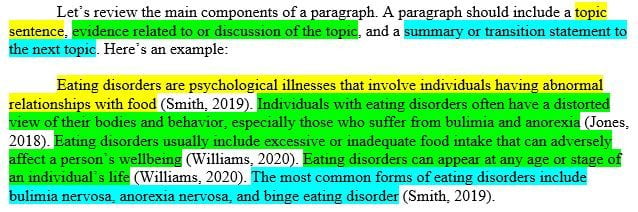
For the literature review, you will also need to synthesize material involving specific information from the studies you are reviewing. So, it is sometimes helpful to extract the key information from the studies before you start drafting the literature review. Key information includes the research approach and design, purpose, setting, participants, and study findings. Synthesizing material for your literature review would look very much like the example above with the details and specifics of studies relevant to your topic included to make your points. It is also important that you note where study findings converge and diverge. Lastly, it can be helpful to look at previous approved dissertations from your school to see how previous researchers have approached and organized the literature review.
Need help with your project? Leverage our 30+ years of experience and low-cost service to make progress on your results!
Schedule now using the calendar below.
The use of technology for qualitative data collection was nothing new before the COVID-19 pandemic began. However, using technology like videoconferencing to conduct interviews and focus groups is now the norm, rather than the exception, and may be for some time. This blog provides some pointers for modifying your qualitative data collection in a pandemic.
One consideration when conducting long-distance interviews online is privacy. Before the pandemic, researchers used Skype with some frequency to conduct long-distance interviews. Skype allows recording of calls for later downloading and transcribing. However, other programs may be a bit better in terms of privacy. Zoom and GoToMeeting both have enhanced privacy controls, which are important when collecting data. Also, the researcher can assign a password to enter the interview or lock the program once the participant has arrived, making it difficult for hackers to enter the interview.
Another consideration is the comfort level of your participants. As researchers, we want to make the research process as easy and streamlined as possible for our participants. Zoom and GoToMeeting are nice because they do not require the participant to have an account, unlike Skype, which requires participants to create their own accounts. Some people may not be comfortable creating an account simply to participate in research, which might mean that an otherwise-willing participant chooses not to participate because of this requirement.
Finally, there are the practical considerations. First, knowing the platform you are going to use is imperative. Read or watch tutorials to really learn how the platform works and all its features. Then, you must check that all technology is working prior to the interview. If you have someone you can test the videoconferencing with, do this, as it also gives you the chance to test all controls and settings in the platform. Third, establish rapport with your participant at the beginning of the interview (if you haven’t done so already). Introduce the topic of the research, who you are, and why they are participating. During the interview, maintain eye contact and demonstrate that you are listening, but do not interrupt your participant, just as you would if you were face-to-face. Pay attention to their facial expressions and mannerisms. You are viewing your participants through a camera, so you can certainly still pick up on important cues from their behavior during the interview.
You may have started your dissertation journey long before a pandemic was on the horizon, and you are now scrambling to revise your data collection plans based on social distancing, but this is very doable. With just a little tweaking, you can find the right videoconferencing program for you and conduct your socially distanced interviews remotely.
Take the course: Data Collection Methods

The Quantitative Results Chapter includes confirming the correct analyses, conducting the actual analyses, and the write-up and explanation of the findings. You must conduct descriptive statistics on demographic and research variables (i.e., mean, standard deviation, frequency and percent as appropriate); Conduct analyses and assess assumptions to examine the research questions; and Assess the assumptions of the analyses. The Qualitative Results Chapter includes thematization and reliability. You must read and re-read your interview transcripts; Thematize your participant responses; and Draft or co-draft results chapter to present themes and supporting excerpts of those themes.
Typical time to completion: 30 days
Best resources:
Software & Tools
Directory of Statistical Analysis
Webinars
Almost There – Results, Discussion, & APA Editing
Results, Discussion, APA Editing, & Defense
Blogs
Tips for Writing Qualitative Results When you Don’t Feel like Writing
Quantitative Results Chapter (in less than 1 week)
Preparing for your Accelerated Quantitative Results Session
Reducing Redundancy in Results Chapters
Adding Length to the Results Chapter
My Results were not Significant… Now What?
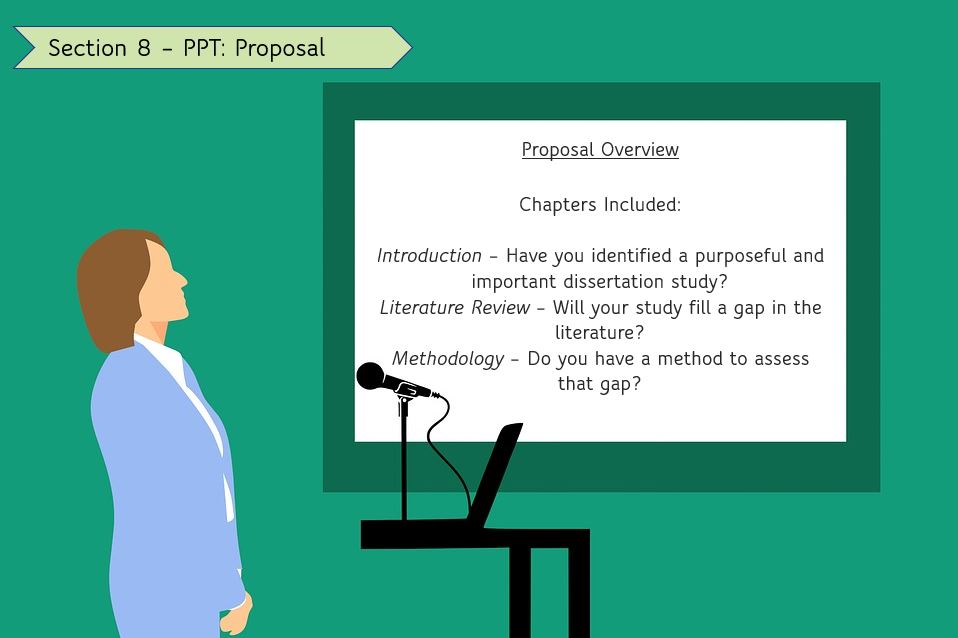
Generally, the dissertation proposal consists of Chapters 1-3: the Introduction, the Literature Review, and the Methodology. More specifically, your dissertation proposal will need to show your committee that you have identified a purposeful and important dissertation study (part of the Introduction, Chapter 1), will fill a gap in the literature (part of the Literature Review, Chapter 2), and have a method to assess that gap (part of the Methodology, Chapter 3).
Typical time to completion: 30 days
Best resources:
Blogs
Expectations of the PowerPoint Dissertation Proposal Defense
The Do’s and Don’ts to Presenting your Dissertation Proposal
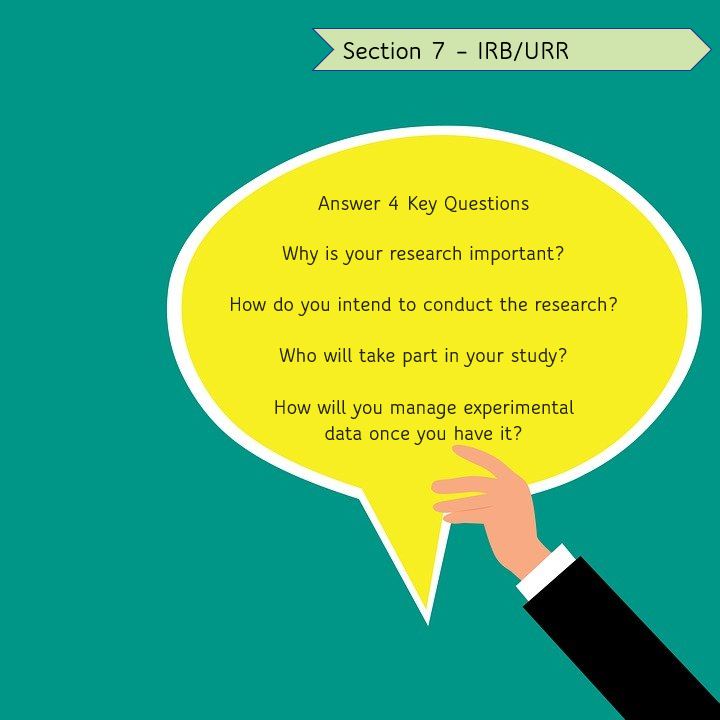
The purpose of the IRB proposal is to answer four key questions of why your research is important, how you intend to conduct the research, who will take part in your study, and how you will manage experimental data once you have collected it. Just as with the other chapters you will write as you work through this process, the IRB application can be broken down into a few key components. Adequately addressing these four key components will give your IRB confidence in your ability to proceed with the study in a safe and ethical manner.
Typical time to completion: 60 days
Best resources:
Webinars
Blogs & Articles
How to Write your IRB Application for Approval
Avoiding Hurdles in your IRB Application
Reporting and Improving Readability of your IRB Materials
Tools to Expedite your Proposal, IRB, and Results
Dealing with committee and IRB issues? You’re not alone!
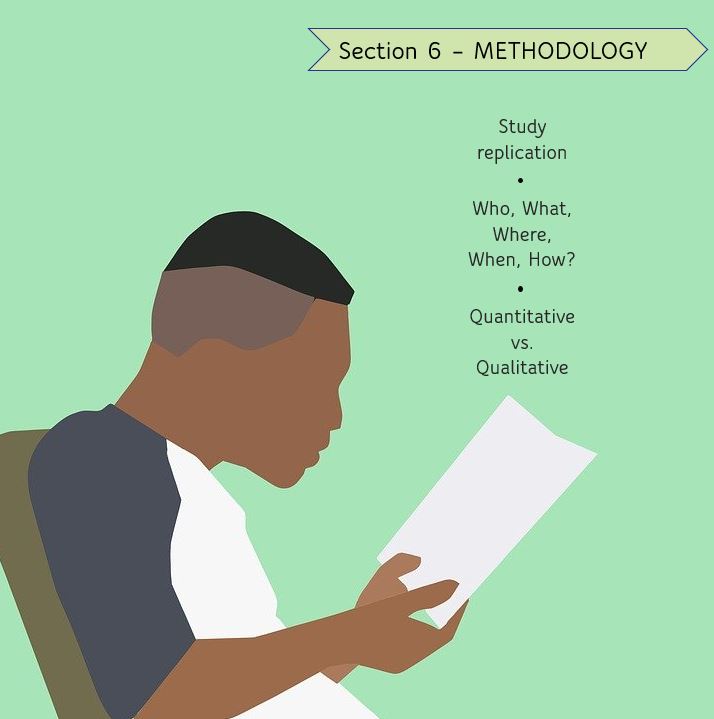
The scientific method—i.e., the method used in dissertations—is based, in part, on the ability of others to replicate your study. Specifically, in order to faithfully replicate your study, other researchers must know the Who, What, Where, When, and How of your study. While there are nuanced difference in the details between qualitative and quantitative studies, the methodologies to both are similar. In short, a methodology provides a blueprint for other researchers to follow, allowing them to conduct their own study while using your method to arrive at similar findings. The following excerpts provide a brief overview of how the two approaches to methodology formation differ.
Typical time to completion: 60 days
Best resources:
Webinars
Methodology and Results Game Changer
Tools & Templates
Sample Size/Power Analysis Calculator with Reference Generate
Blogs
Beginning the Dissertation Process: The Importance of the Methodology
Capella Research Plan Section 2.4: Methodology and Basic Overview
How to Choose Your Qualitative Methodology
7 Elements of your Dissertation Methodology
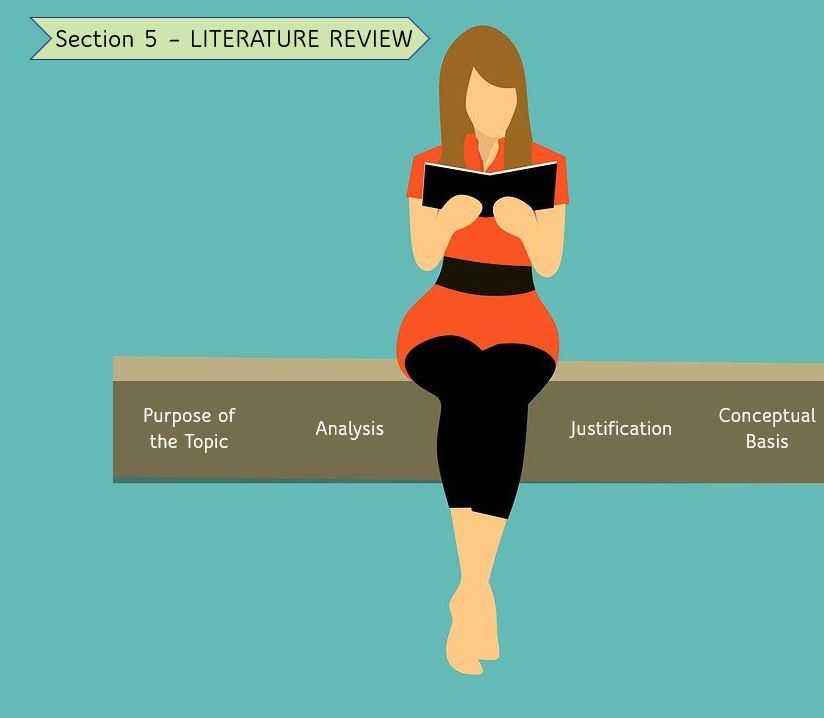
Your Literature Review chapter represents an integral component to your successfully completing your dissertation. This is because, after the Literature Review’s introduction—which orients the reader as to the purpose of the topic and states the main points clearly—this chapter provides the conceptual basis, justification, analysis, and interpretation of the problem under investigation. It does this by presenting: (1) the historical knowledge in the field; (2) knowledge of similar research; (3) knowledge pertaining to unsolved problems surrounding your topic; and (4) any knowledge of gaps in the literature.
Typical time to completion: 60 days
Best resources:
Webinars
Navigating you Literature Review – Tools to Save Time
Blogs & Articles
Literature Review: Shaping your Dissertation
Literature Reviews from the Ground Up
The Literature Review, Part 1: What to Include
The Literature Review, Part 2: What Not to Include
How to Structure your Literature Review
Finding and Managing Literature Review Sources
5 To-Do’s When Writing your Literature Review
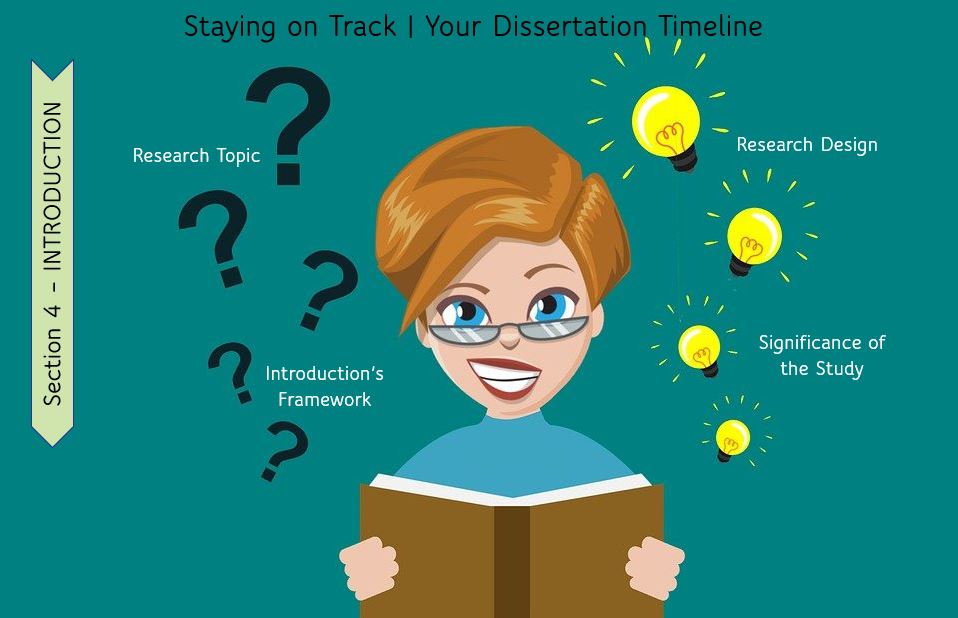
Generally, introductions serve as an easy way for the unfamiliar to take on an air of familiarity. In fact, the same can be said about getting your dissertation started. In this case, the Introduction to your dissertation aims to firmly ground an unfamiliar reader in your research topic, developing enough interest along the way such that your audience actually wants to read the rest. In order to facilitate this familiarizing effect, this section of your dissertation begins with setting up the problem, as well as the general topic you aim to explore.
Typical time to completion: 60 days (completion time estimate is reduced with completion of SMR/RP or Prospectus/Concept paper)
Best resources:
Webinars
Everything you need for a Great Introduction and Literature Review but Were Afraid to Ask
Introduction and Literature Review
Prospectus and Dissertation Introduction: Everything you need to know
Blogs & Articles