Sometimes it’s easy to believe that outside forces and lack of resources control and create our lives. Living in this belief, excuses for failures, such as lack of talent, money, genetics, or the right environment arise. I don’t believe that, and you shouldn’t either!
Nietzsche is a favorite philosopher of mine who famously said, “He who has a why to live can bear almost any how.” Our purpose is stronger than any set of circumstances.The Upanishads, written twenty-four hundred years earlier, state:
“I indeed, I am this creation, for I have poured it from myself. In that way, he became that creation. He who knows this becomes, in this creation, a creator.”
I’d like to think that if Nietzsche read this passage that he’d have said something like “She who has a why to live can create almost any how.” I believe our purpose—our why—merged with what we focus on, the meaning that events, activities, and relationships have for us, and our action, can surely lead us to be creative forces in the world.
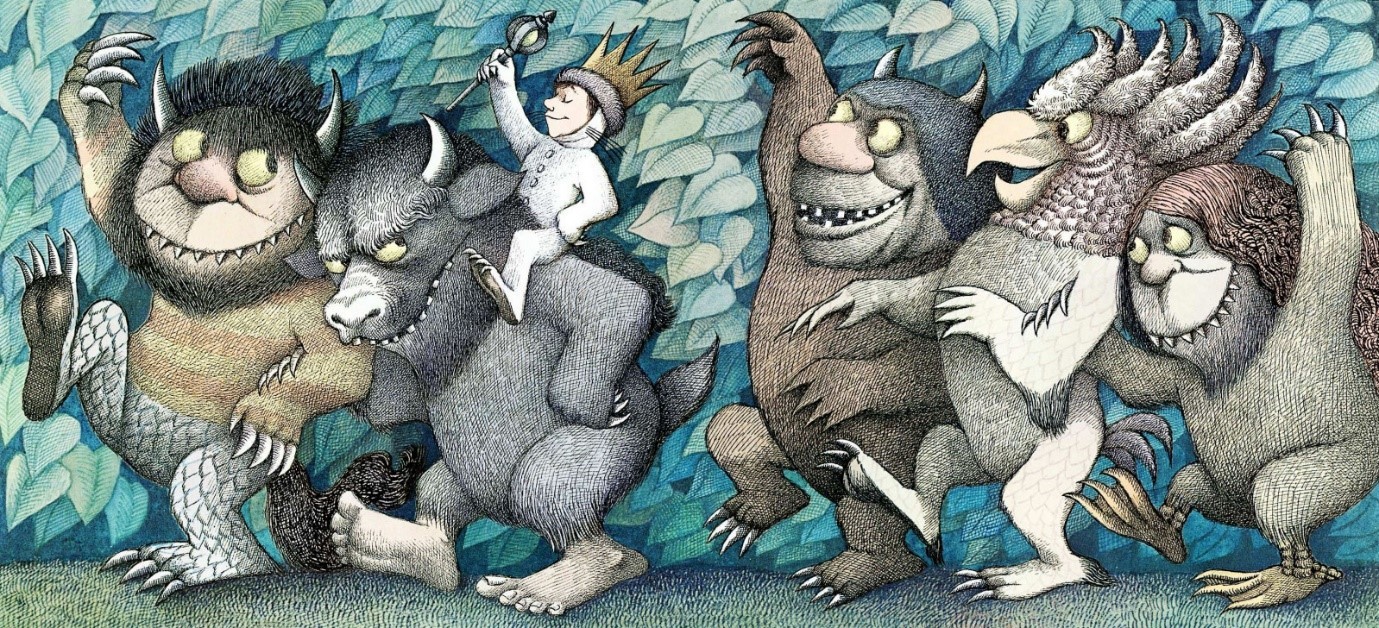
In a final 2011 interview with Terry Gross, Maurice Sendek, author of Where the Wild Things Are, ended the interview by saying, “Live your life, Live your life, Live your life.” We have such a unique existence here and such a unique contribution to make. I know when we are fully present for our lives—with an emphasis on living Your life—we will surely be the creators spoken of in the Upanishads so many years ago.
Enjoy,
Dr. James Lani
Need assistance for your research?
Select a time to speak with an expert using the link below

What does it take to live an extraordinary life? What would it mean to crush it? An old friend once said, “the quality of your life is directly related to the quality of your questions.” So let’s start asking questions!
Focus. What do you want to focus on? What do your relationships look like? How are your kids, parents, friends doing? What’s going on in your work life? How are your formal and non-formal educational pursuits going? Are you making a contribution in your job? How is your health? What have you been ignoring? What have you been doing to up your game? Pick 20 top domains to focus on.
Vision. So once you’ve chosen what to focus on, you are in a position to see the ideal vision in each of these areas. I’ll give you an example. When I come home from work each day I choose to focus on my 16-month-old daughter Jasmine. My ideal vision with her is to be present, teach her, and to be silly and make her laugh.
Need assistance for your research?
Select a time to speak with an expert using the link below
Meaning. After you have your focus and ideal vision, ask yourself “What meaning does that vision have for you?” Continuing with the example, teaching Jasmine and making her laugh means to me that I’m doing a good job as a parent, I’m developing a smart, light-hearted person in the world, and I’m helping develop a thoughtful woman.
Action. Now that you have a focus, vision, and the meaning that vision has for you, think about what action you want to follow. For me, I go home with clear thoughts so I can be present with her (I’m not distracted), I find ways to be goofy with her (typically, I sneak around and play peek-a-boo), and look for spontaneous and non-spontaneous opportunities to teach her no matter the activity.
When we think about our best life, what we want to focus on, the ideal vision, what it means to us, and what actions to take, then I know we’ll all be crushing it!
To your extraordinary life!
Very best, James
 Let’s talk about getting what you want. No matter who you are, and no matter the role model who has showed you the way, successful people getting what they want share at least three qualities. These qualities cited by Bandler and Grinder are a belief system, mental syntax, and physiology.
Belief system is believing that you can attain that position or perform that activity. Think about any US president—they have to know and see the image of themselves as a president clearly in their mind. There’s a story about Walt Disney’s brother Roy and Walt’s wife Lillian standing in front of Disney World. Roy said, “oh, I wish Walt was here to see this.” When Lillian spoke, she said, “If Walt didn’t see it, we would not be here.” That’s belief.
Mental syntax is how you talk to yourself. Walt Disney didn’t say to himself, “oh, I can’t make this movie happen” or “this is a dumb drawing of a mouse.” He was more likely to say, “this mouse is an interesting character, how can I animate that character, … I like this aspect, how can I improve upon it, what details do I need to pay attention to .…” It’s talking in positive terms that build upon each other.
Physiology is how we breath, how loud we speak, the tone of our voice, and how we hold ourselves. Do you think Disney walked around with his shoulders slumped down and inward? I don’t think so. He likely walked around with a smile on his face, his shoulders back, attentive eyes, and an engaging body language. To be a leader in your life you need to walk and talk like one.
As I write this, I’m aware that these are three things that don’t require another person and that you can in this moment, start setting the stage to get what you want. I invite you to get what you want in your life—its late in the day for all of us!
In text: Use double quotation marks to enclose quotations. Use single quotation marks to set off quotes within quotes.
Correct: Smith stated, “Benin wrote ‘the limit does not exist’ when referring to this equation” (p. 9).
Incorrect: Smith stated, “Benin wrote “the limit does not exist” when referring to this equation” (p. 9).
In block quotations (any quotations of 40 or more words): Do not use quotation marks to enclose block quotations. Use double quotation marks to set off quotes within block quotations.
With punctuation: Place periods and commas within closing quotation marks. Place other punctuation inside quotation marks only when they are part of the quoted material. (APA6, 4.08).
Words that can have multiple meanings, such as while and since, sometimes cause reader confusion. Because precision and clarity are standards in academic writing, the APA suggests that you restrict use of while and since to their temporal meanings only (APA 6, 3.22).
Examples:
- While: Use while to link events occurring simultaneously; otherwise, use although, and, or but.
- Correct: Every dog dreams of catching its tail while running in circles.
- Correct: Although every dog dreams of catching its tail, Fido never tried.
- Incorrect: While every dog dreams of catching its tail, Fido never tried.
- Correct: The argument was well founded, but Lisa’s mom still refused to get her a pony.
- Incorrect: While the argument was well founded, Lisa’s mom still refused to get her a pony.
- Since: Using since to only mean “after that” will reduce confusion with readers; otherwise, replace it with because.
- Correct: Geoffrey has wanted to rule his own kingdom since he was a young boy.
- Correct: Geoffrey believed that he should be allowed to rule his own kingdom because he was 15 years old.
- Incorrect: Geoffrey believed that he should be allowed to rule his own kingdom since he was 15 years old.
Need Help with your Analysis ?
Schedule a time to speak with an expert using the link below.
 Academic writing can seem like an incredibly daunting task. When I was a graduate student, writing was something that I often dreaded. I managed to survive graduate school mostly by binge writing, but any prolific writer will tell you that binge writing is not the way to go. Many graduate students struggle to be effective and productive writers (I know I did). The most consistent piece of advice I got from professors and colleagues throughout graduate school was to make time to write every day. The more general point behind this advice, however, is that developing good, strong writing habits is a key to being a productive writer. And this doesn’t just apply to writing; good habits can help you be more productive in any kind of work.
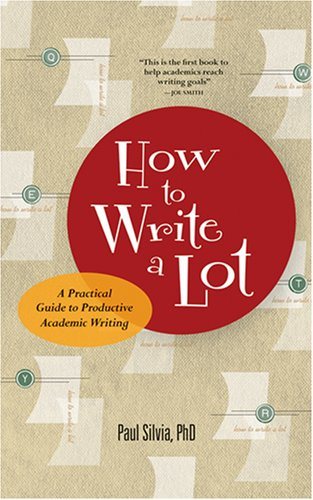
There is a great book called “How to Write a Lot” by Paul Silvia that several professors recommended to me throughout graduate school that I now recommend to my students and colleagues who struggle with writing. It’s very short and easy to read. This book provides direct, concrete advice for fostering good writing habits and using your time effectively. Below is a synopsis:
“All students and professors need to write, and many struggle to finish their stalled dissertations, journal articles, book chapters, or grant proposals. Writing is hard work and can be difficult to wedge into a frenetic academic schedule.
In this practical, light-hearted, and encouraging book, Paul Silvia explains that writing productively does not require innate skills or special traits but specific tactics and actions. Drawing examples from his own field of psychology, he shows readers how to overcome motivational roadblocks and become prolific without sacrificing evenings, weekends, and vacations. After describing strategies for writing productively, the author gives detailed advice from the trenches on how to write, submit, revise, and resubmit articles, how to improve writing quality, and how to write and publish academic work.”
Yours in Success,
Dr. David Kovaz
For more information and examples, see APA6, Section 4.13.
Minus sign: A typeset minus sign is the same length as an en dash, but it is slightly thicker and slightly higher. If a minus sign is not available in your Word-processing program, use a hyphen with space on both sides (e.g., a – b). For a negative value, use a minus sign with a space before but no space after (e.g., -5.25).
Hyphen: Use no space before or after (e.g., trial-by-trial).
Em dash: An em dash is longer than a hyphen or en dash and uses to set off an element added to amplify or to digress from the main clause (e.g., Studies—published and unpublished—might include). Use no space before or after an em dash. If an em dash is not available on your keyboard, use two hyphens with no space before or after. The shortcut is to press Ctrl + – + – (2 hyphens) = ––.
En dash: An en dash is longer and thinner than a hyphen but shorter than an em dash, and will use in between words of equal weight in a compound adjective (e.g., Chicago–London flight). This hyphen might also used in between number ranges, such as page numbers in citations and references. Type as an en dash (–) by pressing Ctrl + – , a single hyphen. Use no space before or after.
Need help with your project? Leverage our 30+ years of experience and low-cost service to make progress on your results!
Schedule now using the calendar below.
General Rules for Using Hyphenation
- If a compound adjective can be misread, use a hyphen.
- In the jungle, I saw a man eating peacock! In the jungle, I saw a man-eating peacock! (In the first sentence, it implies that a man is eating a peacock; in the second, it implies that the peacock is aggressive and eats people.)
- Use a hyphen if the term can be misread or if the term expresses a single thought (i.e., all words together modify the noun).
- For Susan, it was a sit-on-the-couch-and-drink-wine-with-her-cat kind of day.
- If a compound adjective follows the term, do not use a hyphen, because relationships are sufficiently clear without one.
- Light-brown puppies puppies that are light brown
- Write most words formed with prefixes as one word (no hyphen needed).
- Copresident, not Co-president
- Pseudopsychology not pseudo-psychology
- Midlife crisis not mid-life crisis
- When two or more compound modifiers have a common base, that base is sometimes omitted in all except the last modifier, but the hyphens are retained.
- We only had 6-, 7-, and 8-pronged forks to use at the dinner party.
- At the zoo, we saw long- and short-necked giraffes.
 “A man who views the world the same at fifty as he did at twenty has wasted thirty years of his life.” Muhammad Ali
This past month Muhammad Ali passed away. There were lots of stories reported about his life. One story caught my attention, a story about his bicycle being stolen. As the story went, when Ali was 12 years old, someone stole his bicycle. When the police came to take the report, he told police that “when I find the thief I’m going to whoop him.” The police officer said “if you’re going to do that, you better learn to box.”
I love the story that, we determine what things mean. That event helped shape his career in boxing and Ali’s life. What can feel like a hole in your life, might be a place to put a peg to raise your life to an even greater level. Ali was known as The Greatest. How about your disappointments and missed opportunities, the so-called delays in life? Did they leave holes in your heart or did you do something with them? At the end of our lives it will not be the number or size of the holes that matter, but rather how we used them to excel to be the greatest us that has ever lived.
Many writers are lost regarding the differences between using a colon and a semicolon, often using these punctuations incorrectly. The following details use of each punctuation according to APA 6 (pp. 89–90).
Semicolon:
Use a semicolon
- To separate two independent clauses that are not joined by a conjunction.
- The participants in the first study were paid; those in the second were unpaid.
- To separate elements in a study that already contains commas
- The color order was red, yellow, blue; yellow, blue, red; or blue, red, yellow.
- (Smith, 1999; Thomas, 1998).
Colon:
Use a colon
- Between a grammatically complete introductory clause (one that could stand as a sentence) and a final phrase or clause that illustrates, extends, or amplifies the preceding thought. If the clause following the colon is a complete sentence, it begins with a capital letter.
- For example, Freud (1930) wrote of two urges: an urge toward union with others and an egotistic urge toward happiness.
- They have agreed on the outcome: Informed participants perform better than do uninformed participants.
- In ratios and proportions
- The proportion was 1:8
- In references between place of publication and publisher
- New York: Wiley.
Do NOT use a colon
- After an introduction that is not an independent clause or complete sentence
- The formula is y = mx + b
- The instructions for the task were
Your group’s task is to rank the 15 items in terms of their importance for the crew’s survival.

As a new father I was struck with the recent tragedy at the Cincinnati Zoo where a boy found his way into a Silverback gorilla enclosure for 10 minutes prior to the gorilla being killed. And while focus can be directed to the insufficient guard rails around the exhibit or seemingly inattentive mother, this incident reminds me of the bystander effect.
The bystander effect is the phenomenon that the probability of receiving help is inversely related to the number of bystanders. If it were just one other person that saw the boy fall in the gorilla enclosure, would they have intervened rather than waiting for someone else to help? The phenomenon was first identified through the Kitty Genovese murder in 1964 where many people heard her call for help but no one responded.
This brings me to Lin Hao. He was a nine-year-old boy in 2nd grade sitting in his classroom when an earthquake hit and collapsed the entire building. He was the first one out, yet at risk to his own life, he went back into the building to pull out two classmates. He could have easily stood by and waited for someone else to help, but he decided not to be a bystander. When asked why he risked his own life, he said, “I was the hall monitor, it was my job to look after my classmates.”
In thinking about the three examples above I want to remind all of you not to go through your life as a bystander, waiting for someone else to react. This is applicable in all aspects of our lives. If you want something, work for it, don’t wait for it to be handed to you. If you know something can be improved in your life, work, school, speak up and say so. I invite you all to be the change that you want to see in the world. If you want to graduate this year, take action to do so. Set your own timelines, and make it happen. Keep your eye out too: there may be big and small emergencies along the way that require the Lin Hao in us.